
"Other trees"
20000 article(s) found

Coffee carving skills the growth environment and characteristics of coffee trees
Coffee beans are fresh and green coffee raw beans, which are obtained by removing red pulp, peel and silver skin from coffee fruit. The structure of coffee fruit is composed of outer skin, pulp, endocarp, silver skin and seeds. The shape is oval, usually the fruit of coffee is composed of two oval seeds opposite each other, and the other side is flat, so it is called flat bean, but it is also made up of
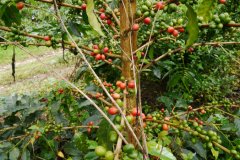
The history of the fight against leaf rust in the coffee industry in Colombia-a disease that coffee lovers must know about
Professional baristas follow the coffee workshop (Wechat official account cafe_style) if you landed in Bogota by plane in the 1960s, the first thing you could see from the airport was a huge sign that read in a stern tone: coffee leaf rust is the enemy. Please do not bring plants into the country from abroad. This is the Colombian coffee trade.

Cultivation of Coffee and Cultural Coffee trees
Coffee cultivation now, in the belt between the Tropic of Cancer and the Tropic of Cancer, coffee is widely grown. Coffee grown in different regions has different flavors. The unique soil, climatic conditions and planting methods of a country make the coffee produced in that country have a unique flavor. French winemakers call this phenomenon regional style. Geographically, a global coffee growing area

The importance of coffee shade trees the benefits of coffee shade trees
Professional coffee knowledge exchange more coffee bean information Please pay attention to the importance of shade trees in coffee in the coffee workshop (Wechat official account cafe_style) in this era of climate change, shade trees are undoubtedly very important in coffee cultivation. Their umbrella awnings provide shade, relieving the high temperatures and pressures that lead to miscarriage of flowers and fruits. The shade also provides a lot of its

Introduction to the species and types of coffee trees in Liberia
The main types of coffee trees: the first species of Arabica is Arabica beans, which account for 70% of the world's output. The world-famous Blue Mountain Coffee and Mocha Coffee are almost all Arabica species. The other is the Robasta species, which is native to the Congo in Africa and accounts for about 20% to 30% of the world's output. Different varieties of coffee beans have different flavors.

The way coffee is grown. A conscientious coffee tree.
Coffee cultivation is now widely grown in the ribbon between the Tropic of Cancer and the Tropic of Cancer. Coffee grown in different regions has different flavors. The unique soil, climatic conditions and planting methods of a country make the coffee produced in that country have a unique flavor. French winemakers call this phenomenon regional style. Geographically, global coffee
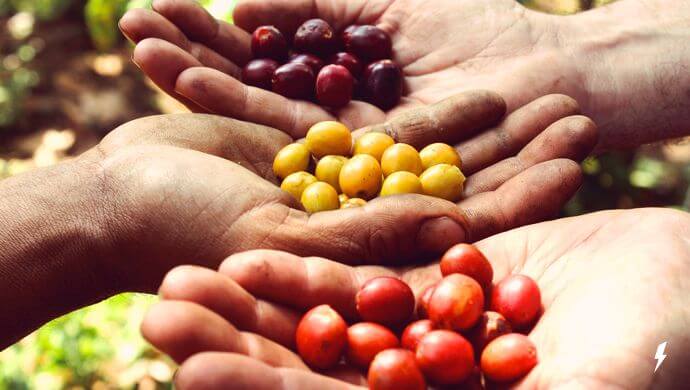
What kinds of coffee trees are there? Introduction to the origin and characteristics of common coffee varieties
Professional coffee knowledge exchange more coffee bean information please follow the coffee workshop (Wechat official account cafe_style) by understanding the history of coffee [the history and development of coffee! The mysterious red fruit has become a global black gold trend to learn how coffee has spread from Africa to other places. What are the next coffee trees? Uncover the mysterious noodles of coffee

Learn the basic concepts of coffee
1. What is coffee (scientific name: Coffea arabica), also known as coffee tree, Arabica coffee, etc., is the national flower of Yemen. Before the 6th century AD, Yemen was called Arabian, so the coffee trees shipped from them to other places were also called Arabian coffee trees. The name coffee comes from the Arabic Qahwah, which means plant drink. Later, coffee spread.

Selection of Autumn Coffee Story Arabica theme introduction hand-made coffee introduction
If the variety of coffee is divided by biology, it can be divided into Arabica, Robusta and Liberica. There are more than 6000 species of coffee trees, most of which are tropical trees and shrubs. There are four main kinds of coffee trees in the world, and only two of them are of real commercial value and have been planted in large quantities.

Balu Volcano-Morgan Manor-the flavor and cooking of washed green roses in the Walken region of Panama?
Professional coffee knowledge exchange more coffee bean information please follow the coffee workshop (Wechat official account cafe_style) Panama Volcano Baru-Morgan Manor-washed green roses summer flavor and brewing? Panamanian Coffee Manor-Morgan Manor is close to the Ziricki volcano, 1600-1800 meters above sea level, located on the steep slope west of the Baru volcano.

Coffee bean variety small encyclopedia _ how much do you know about these beans?
There are four main coffee trees in the world, of which only two are of real commercial value and are planted in large quantities, and the quality of the coffee beans produced by other coffee trees is also higher than that of other coffee trees.
Coffee planting History of Coffee introduction and expansion in China in the early stage (3)
1. Investigation on the year of coffee introduction in Hainan Island in 1898 1.1 the age of the early introduction of coffee in Hainan Island is indisputably expressed as 1908 in many local chronicles, agricultural history, agricultural history and various books and periodicals in China. However, the remains of the century-old coffee trees in Hainan Island are still there, and the descendants of the ancient trees are still there. Therefore, the century-old coffee trees that actually exist in Hainan have unequivocally rewritten Hainan.

A coffee tree can produce about 3-5 kg of coffee cherries.
A coffee tree can produce about 3-5 kilograms of coffee cherries and can be refined into one-fifth of the weight of green coffee beans. Among them, coffee cherries are transformed into green coffee beans by many hands and time. Arabica and Robusta Arabica accounts for about two-thirds of the world's coffee production and is not suitable for growing in areas with high temperature, low temperature, much rain and little rain. The beans are oval and flat
What are the effects of altitude, temperature and dimension on coffee? How do coffee varieties and altitude reflect each other?
For more information on coffee beans, please pay attention to what kind of coffee varieties should be planted in coffee workshops (official Wechat account cafe_style). This involves complex genetic traits and ecosystems, and has become the hottest field of coffee science in recent years. How does Dr. Dr. Bernard Guyot of the French Center for International Agricultural Development affect coffee on altitude and variety
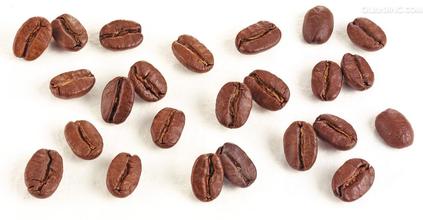
The treatment process and spread of raw coffee beans
Roasted coffee beans appeared on the market for the first time-coffee trees in 1865 (Pittsburgh, USA) usually grew to 5-10 meters tall. the older the coffee tree, the fewer branches, but more and more leaves and fruit. Coffee trees usually begin to bear fruit three to four years after planting. The number of years in which the coffee tree produces fruit, depending on the region planted and the tree species.
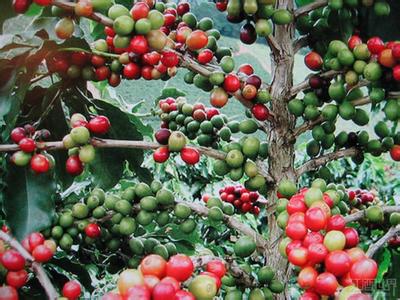
Comparison of two kinds of coffee trees between Arabica and Robusta coffee beans
In terms of varieties, coffee trees are mainly divided into two types: one is Arabica, and the other is Robusta Arabica Robusta, which is mainly produced in tropical Central and South America and on the island of Madagascar in west and central Africa. Indonesia in Asia is planted on alpine slopes at an altitude of 9002000 meters above sea level and on alpine slopes at an altitude of 200600 meters above sea level.
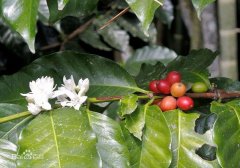
Income of coffee farmers grown in shade coffee tree Arabica coffee beans
First of all, there are some reasons why shade planting has become an advantage. When coffee is planted in the shade of other vegetation, biodiversity provides favorable conditions for its growth. Native plants that provide shade for coffee range from forest plants such as cedar to fruit trees such as banana, orange, lemon, avocado and litchi.
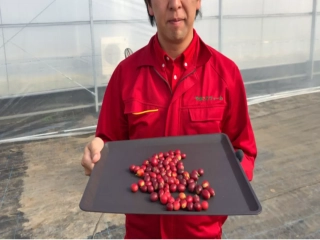
Coffee bean trees can also be grown in Japan! The first batch of Japanese-made coffee beans came out!
Growing coffee locally has been something that generations of Japanese have been pursuing. Due to topography, climate and other reasons, Japan's local natural environment is not suitable for growing coffee. In winter, because it is too cold, it is difficult for coffee trees to survive. Even if they do, they will not be able to blossom and bear fruit.

The basic concept of Coffee that must be known about Coffee
First, know coffee 1, what is coffee (scientific name: Coffea arabica) also known as coffee tree, Arabica coffee, etc., is the national flower of Yemen. Before the 6th century AD, Yemen was called Arabian, so the coffee trees shipped from them to other places were also called Arabian coffee trees. The name coffee comes from the Arabic Qahwah, which means plant drink.
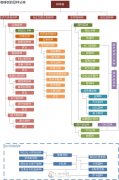
Classification and selection of coffee trees
Arabica Coffee and Variety improvement. What do the so-called families, genera and species of Arabica species mean in biological classification? In terms of biological classification, it is divided into boundary, phylum, class, order, family, genus and species from top to bottom, and the lower part of the species is subdivided into subspecies, varieties and varieties. Arabica coffee is generally thought to originate from the Ethiopian plateau and is widely divided.